
Maasai Mara National Reserve
Kenya's best-known safari landscape combines broad grasslands, big-cat habitat and the seasonal movement of wildebeest and zebra through the Mara ecosystem.
Kenya rewards travellers who combine different landscapes rather than staying in one place. A single journey can link the Maasai Mara, elephant country in Amboseli, rhino habitat at Lake Nakuru, urban wildlife in Nairobi, and the Swahili coast around Mombasa.
Kenya's best-known safari landscape combines broad grasslands, big-cat habitat and the seasonal movement of wildebeest and zebra through the Mara ecosystem.
KWS describes Amboseli as one of Africa's premier places for close encounters with large elephant herds, set across grass plains, marshes and woodland beneath the wider Kilimanjaro landscape.
A semi-alkaline Rift Valley lake surrounded by wildlife habitat. KWS highlights the park's bird diversity and its role as Kenya's first government-managed rhino sanctuary for black and white rhinos.
Kenya's capital works both as an international arrival hub and as a destination in its own right, with museums, restaurants, markets, conservation attractions and a national park on the city's edge.
KWS places the park around 10 km from the central business district. It is known for black rhinos, more than 400 bird species and wildlife scenes framed by Nairobi's skyline.
Kenya's major coastal city mixes port history, Old Town's Swahili architecture, Fort Jesus, markets and easy onward access to beach areas north and south of the island.
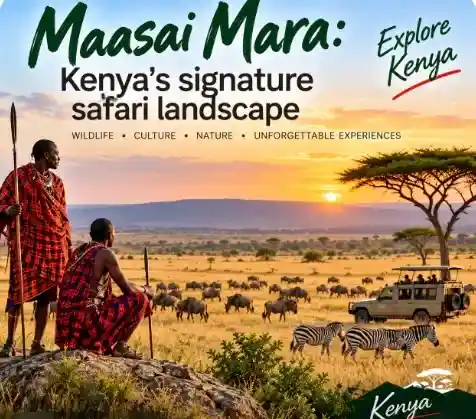
The Maasai Mara is best approached as a wildlife ecosystem rather than a single checklist stop. Big cats, plains game, river systems and open savannah create strong year-round safari interest, while the seasonal migration adds an especially dramatic layer to the experience.
Amboseli's appeal is the combination of open visibility, wetlands fed by underground water and the broader Kilimanjaro backdrop. KWS describes the park as a premier destination for large elephant herds and also highlights birdlife, Maasai cultural heritage and expansive landscapes.
Excellent for travellers who want close wildlife viewing and classic East African scenery.
Clearer early conditions often offer the strongest chance of dramatic mountain views.
Amboseli can fit naturally into routes toward Namanga or Taveta.
Lake Nakuru National Park combines a scenic lake basin with grasslands, woodland, escarpments and viewpoints. KWS lists approximately 450 bird species and identifies the park as Kenya's first government-managed rhino sanctuary, supporting both black and white rhinos.
Nairobi is more than a transit point. It lets travellers mix urban culture with wildlife and conservation experiences before or after a longer safari. Nairobi National Park sits close enough to the city for a half-day visit, while museums, restaurants and neighbourhoods can fill the rest of the stay.
KWS describes it as the world's only “wildlife capital”, with rhinos, lions, giraffes, birdlife and open plains against the skyline.
Combine wildlife with a museum, conservation attraction, market or dining experience rather than treating Nairobi as only an airport stop.
Mombasa works best when treated as a historic Indian Ocean city rather than only a gateway to resorts. Magical Kenya describes Old Town as a neighbourhood shaped by centuries of Arab, Persian, Indian, African and European influence, visible in its narrow lanes, carved doors, markets and Swahili architecture.
Fort Jesus is the city's major heritage landmark. UNESCO records that the Portuguese built the fort between 1593 and 1596 to protect the port of Mombasa. Its architecture and later history reflect the competition and cultural interchange that shaped Indian Ocean trade.
Best for history, architecture, markets and a sense of the city's coastal identity.
Beach-oriented travellers often continue south toward resort areas, marine activities and the Kwale coast.
Useful for travellers who want easy access from Mombasa to beach accommodation and city services.
Mombasa connects with Nairobi by domestic air, road and passenger rail services, giving flexibility when combining safari and beach time.
| Destination | Best for | Typical role in a trip | Practical planning note |
|---|---|---|---|
| Maasai Mara | Big cats, savannah, migration season | Core safari | Give it enough nights for repeated game drives. |
| Amboseli | Elephants and Kilimanjaro scenery | 2-3 night safari stop | Pairs well with Nairobi or Tanzania routes. |
| Lake Nakuru | Rhinos, birds, Rift Valley scenery | Short safari stop | Useful on road itineraries northwest of Nairobi. |
| Nairobi | Culture, food, urban wildlife | Arrival/departure hub | Worth at least one intentional day. |
| Nairobi National Park | Fast safari near the capital | Half-day/full-day | Ideal for short stays or stopovers. |
| Mombasa | Swahili heritage and coast | City + beach gateway | Combine Old Town/Fort Jesus with coast time. |
Multi-country safari itineraries often enter or leave Kenya by land. Kenya's Directorate of Immigration Services lists several One Stop Border Posts and active gazetted ports. Travellers should check both countries' immigration rules before crossing.
An active 24-hour land port and OSBP on the Nairobi-Arusha corridor.
An active 24-hour OSBP useful for routes between the Amboseli/Tsavo side of Kenya and northern Tanzania.
An active 24-hour land border and major western cross-border route.
Another active 24-hour OSBP linking western Kenya with Uganda.
Nairobi → Lake Nakuru → Maasai Mara → Nairobi. Best for wildlife-focused travellers with limited time.
Nairobi → Amboseli → Lake Nakuru → Maasai Mara. Adds stronger landscape variety and elephant viewing.
Nairobi → safari circuit → Mombasa/Diani. Good for travellers who want wildlife followed by slower beach time.
Tourist destinations do not have their own separate visa rules. Immigration requirements are determined by Kenya's national entry policy, the passport used, the traveller's status and the route of entry.
Kenya Wildlife Service visitor rules are worth treating as part of itinerary planning, not as fine print after arrival. Current KWS park guidance emphasises staying on established roads, respecting wildlife distance, avoiding single-use plastic, following gate times and remaining in vehicles unless in designated areas.
A balanced first trip usually combines Nairobi, one or more major safari areas such as Maasai Mara, Amboseli or Lake Nakuru, and the coast if time allows.
Yes, especially if you have a free morning or afternoon around an international flight. Its city-edge setting makes it different from rural safari areas.
No. That period is popular for migration activity, but the Mara is a year-round wildlife destination. Exact migration timing varies with rainfall and herd movement.
Lake Nakuru National Park is a major rhino sanctuary, and Nairobi National Park is also important for black-rhino conservation.
No. eTA is a national travel authorisation, not a permit for an individual destination. National parks may separately require park-entry fees.
KE-Visa is an independent travel-document assistance service and is not part of the Government of Kenya, Kenya Wildlife Service, Kenya Tourism Board or a county tourism authority. Destination information on this page is intended to help travellers plan routes while directing immigration and park-specific decisions to official sources.